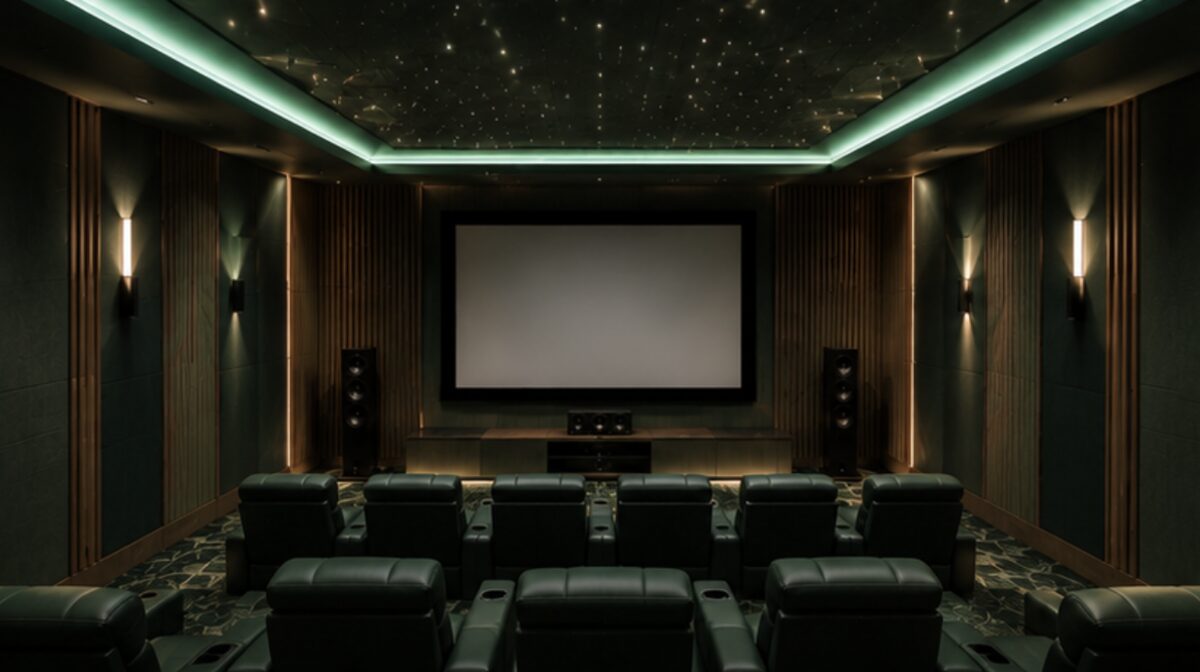
RT60 is the time it takes sound to fall by 60 decibels after the source stops. In a private cinema it governs clarity and impact — too long and dialogue smears; too short and the room feels dead. A broadly even RT60 around 0.3–0.4s is a typical target.
Every room has a natural "tail" — the way sound lingers after it is made. Measured as RT60 (reverberation time to a 60 dB decay), it is the most important single number in cinema acoustics. Get it right and dialogue is effortless, effects are physical, and the system you invested in finally performs.
Why RT60 matters more than the speakers
Most disappointing home cinemas don't have weak equipment — they have an untreated room. Hard surfaces reflect sound, reflections overlap with the direct signal, and detail collapses. No amount of amplifier power fixes a room that is fighting the sound.
- Too long (live room): muddy dialogue, boomy bass, fatiguing.
- Too short (over-damped): lifeless, small, unnatural.
- Even & controlled: clear, immersive, true to the mix.
How VENUE engineers it
We model the room before installation and balance three tools so the decay is smooth across frequencies — not just absorbed in the treble while bass runs wild.
Absorption
Engineered panels tame reflections at the right points — first reflection zones, rear wall, ceiling.
Diffusion
Diffusers scatter sound to keep the room alive without smearing detail.
Bass control
Bass traps manage low-frequency energy that absorption panels alone cannot, so impact stays tight.
Acoustics are designed alongside the rest of the system and the design concept — never bolted on afterwards.
Frequently asked
What is a good RT60 for a private cinema?
A broadly even RT60 around 0.3–0.4 seconds across the key bands is a common target, tuned to room size and use.
Can you fix RT60 after the room is built?
Partly — with added absorption and diffusion. The best results come from designing acoustics in before construction.